
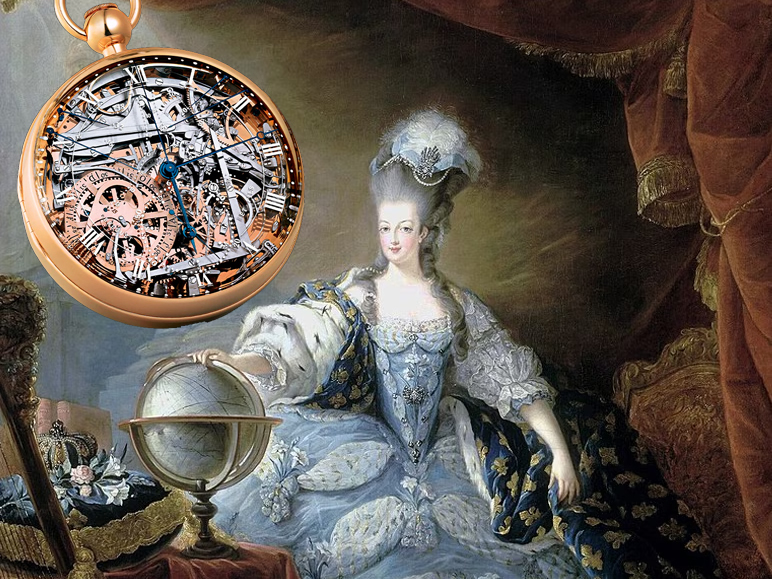
One of the most legendary timepieces in history is the watch known as Marie Antoinette’s Watch, a masterpiece created by the renowned Swiss watchmaker Abraham-Louis Breguet. Commissioned in 1783, this watch was reportedly intended for Queen Marie Antoinette, although she never got to see it completed, as its construction took over 40 years and was finally finished in 1827, long after her execution.
This watch, considered a jewel of horology, was crafted from precious materials such as gold and bronze and featured multiple complications that made it extremely advanced for its time.
In 1983, the watch was stolen from the L.A. Mayer Museum in Jerusalem, along with other valuable pieces. The theft remained unsolved for more than two decades until 2007 when the watch was recovered under circumstances that remain shrouded in mystery. This true story highlights the fascination and value that bronze timepieces have held throughout history and how their legacy endures to this day.
The story of Marie Antoinette’s Watch is a testament to the lasting allure of these objects and how, despite the passage of time, they continue to be symbols of luxury, precision, and beauty.
During the reign of Louis XV (1715-1774), French horology reached unprecedented splendor, combining technical precision with the exuberant aesthetics characteristic of the Rococo style. One of the most outstanding artisans of this era was Robert Robin (1742-1799), who became the trusted watchmaker of the French court, including Marie Antoinette herself.
Robin was renowned for his innovations in watchmaking, such as the invention of a decimal clock and new escapement mechanisms. His creations were not only precise but also featured elegant and sophisticated designs, characteristic of the Louis XV style. A notable example is a mantel clock that is now part of the collection at the Louvre Museum in Paris. This clock stands out for its finely chiseled gilt bronze case, adorned with floral motifs and scrolls, representing the pinnacle of decorative art of the period.
Originally crafted to embellish royal palaces, these timepieces have transcended their aristocratic origins and are now appreciated in homes worldwide. The influence of artisans like Robin endures, and his legacy is reflected in the creations of Virtus, which aim to capture the essence of classic French horology in their bronze mantel clocks and bronze table clocks.
These stories illustrate how bronze clocks have become objects of admiration and desire across the globe.